From a messy customer request to a reviewed quotation.
This is the system we run our own quotations and invoices on. Below is one quotation, from the first email to the saved draft, exactly as it happens on screen.
Demonstrated in a controlled Maxpromo test environment. The customer, the request and the company in it are invented. This is our own system at work, not a customer case study.
Step 1
The request arrives.
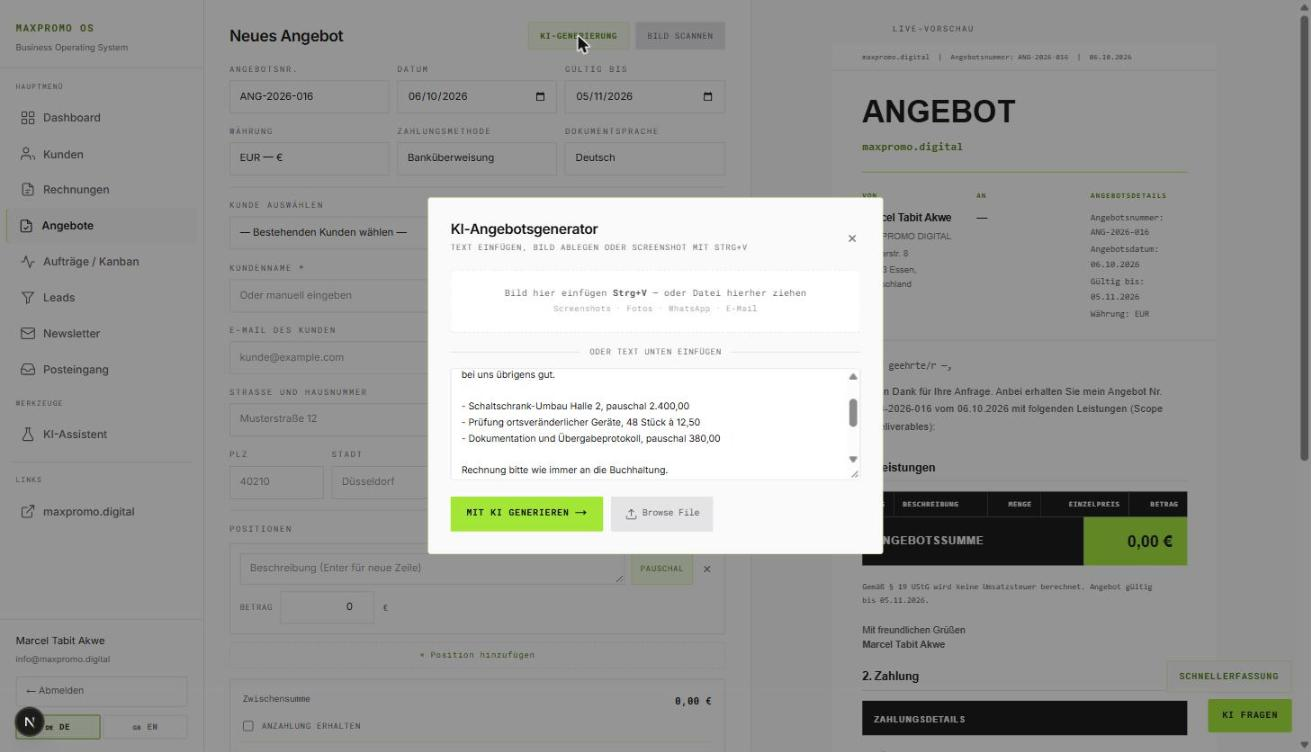
A customer writes the way people write: a greeting, a remark about next week’s appointment, the three things they need, a signature. The email is pasted into the quotation screen as it is. Nobody retypes it.
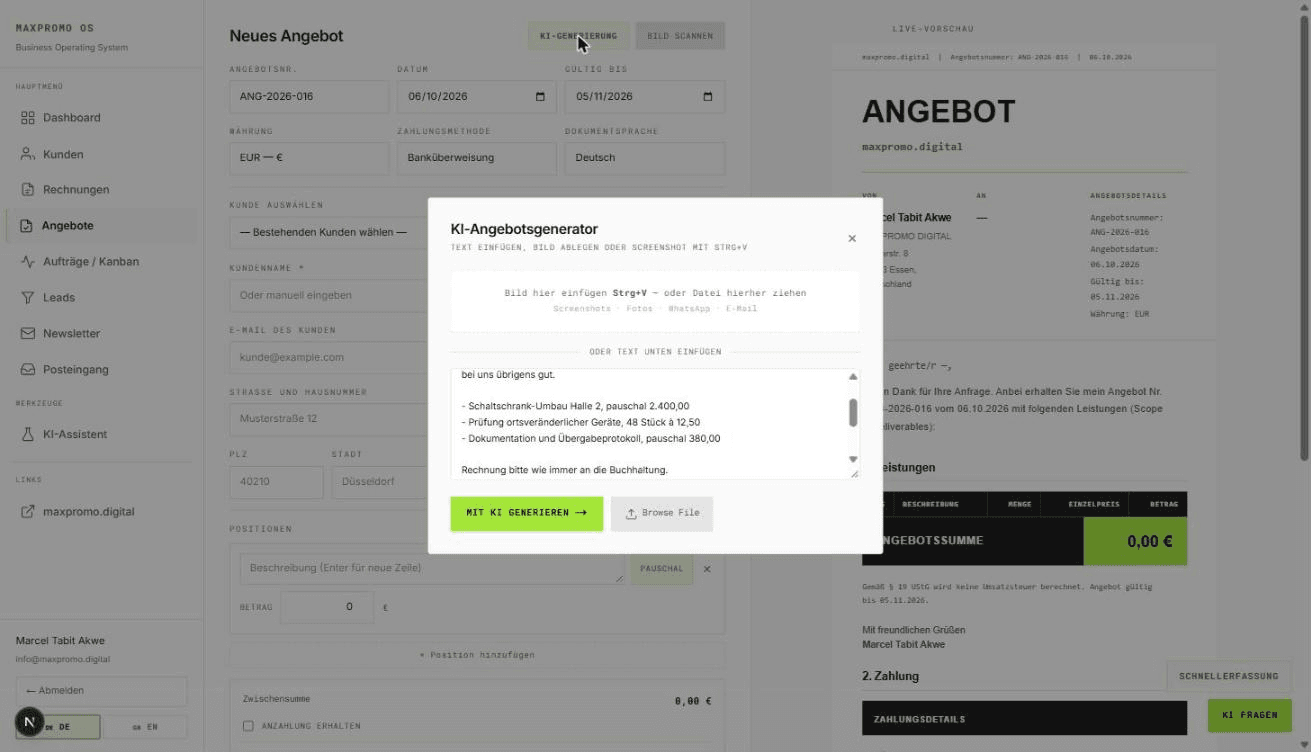
The original email, pasted in. Nothing has been generated yet.Open full size Step 2
The system structures the work.
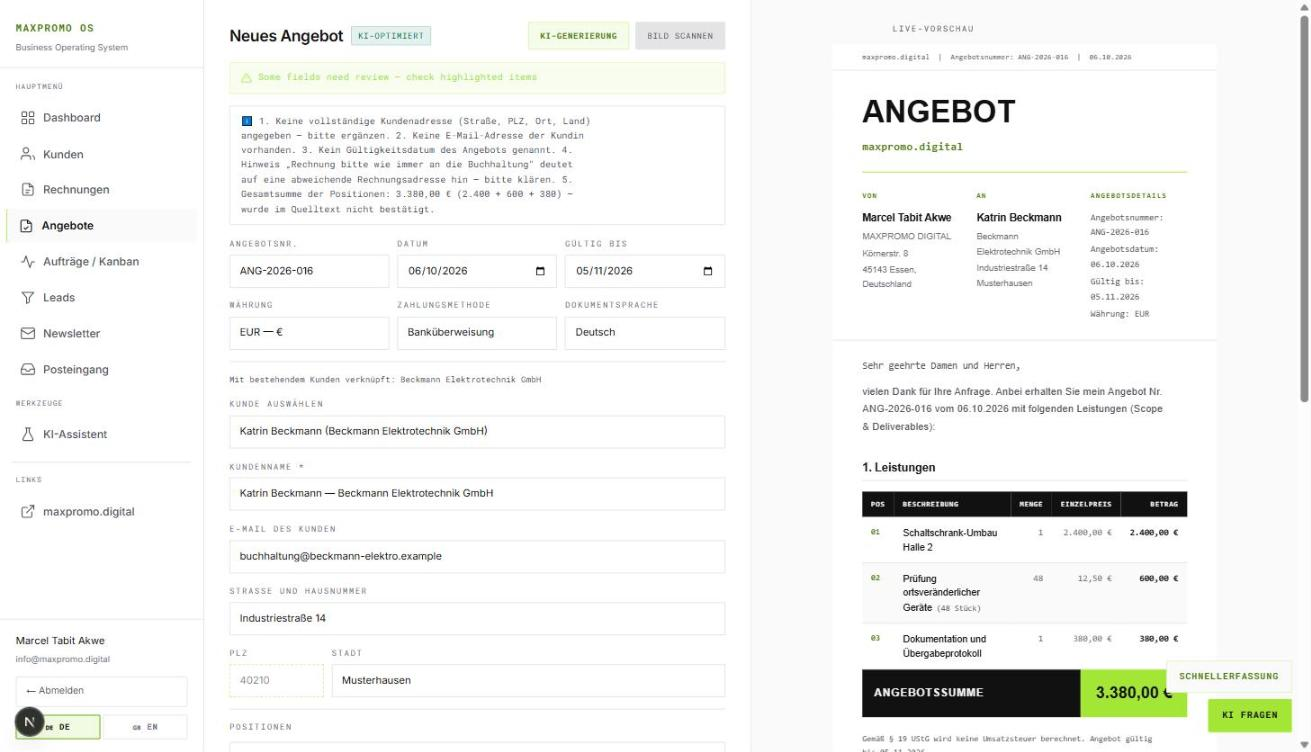
It reads the text and fills in the quotation: the customer, three positions, quantities and prices. The greeting, the appointment and the signature are left out. Then it checks its own result against the original and lists what it could not confirm, such as an incomplete address and a total the email never stated.
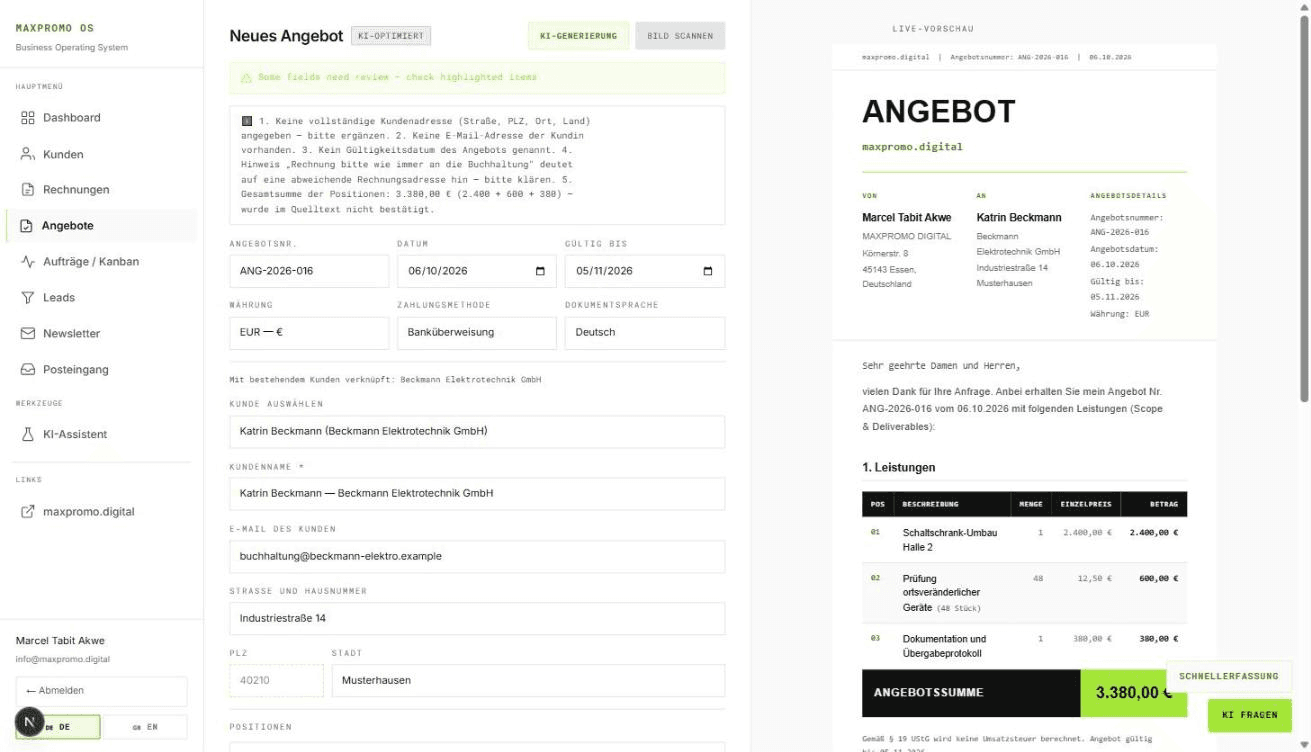
The filled form with the review notes the system raised. The customer was matched to the existing record.Open full size Step 3
A person reviews it.
At this point nothing has been saved. The form is a proposal. Someone reads the positions, checks them against what was asked for and decides whether it is right. Anything the system could not find in the original would be held here until a person deals with it.
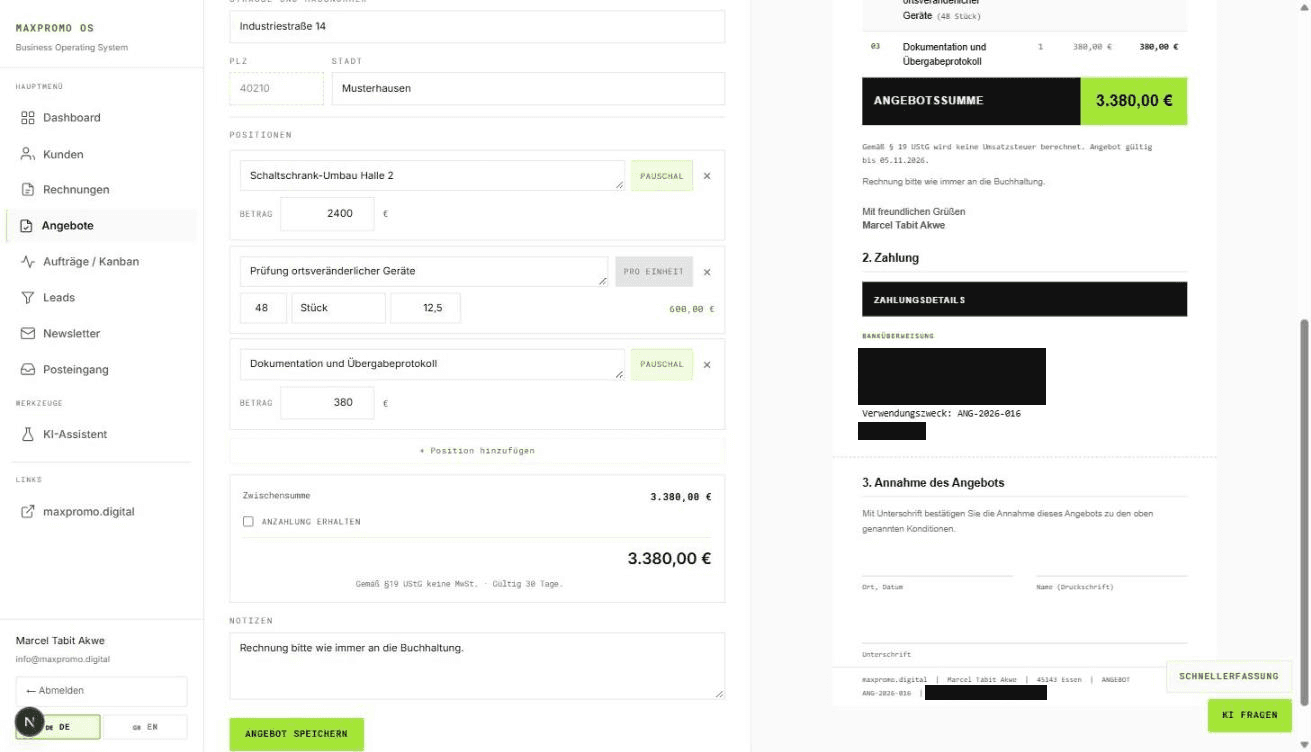
Three positions and the total, before saving. The save button has not been pressed.Open full size Step 4
The draft becomes a business record.
Only when the person saves does a record exist. The server issues the quotation number at that moment and stores the quotation as a draft. Sending it to the customer is a separate decision, taken later, by a person.
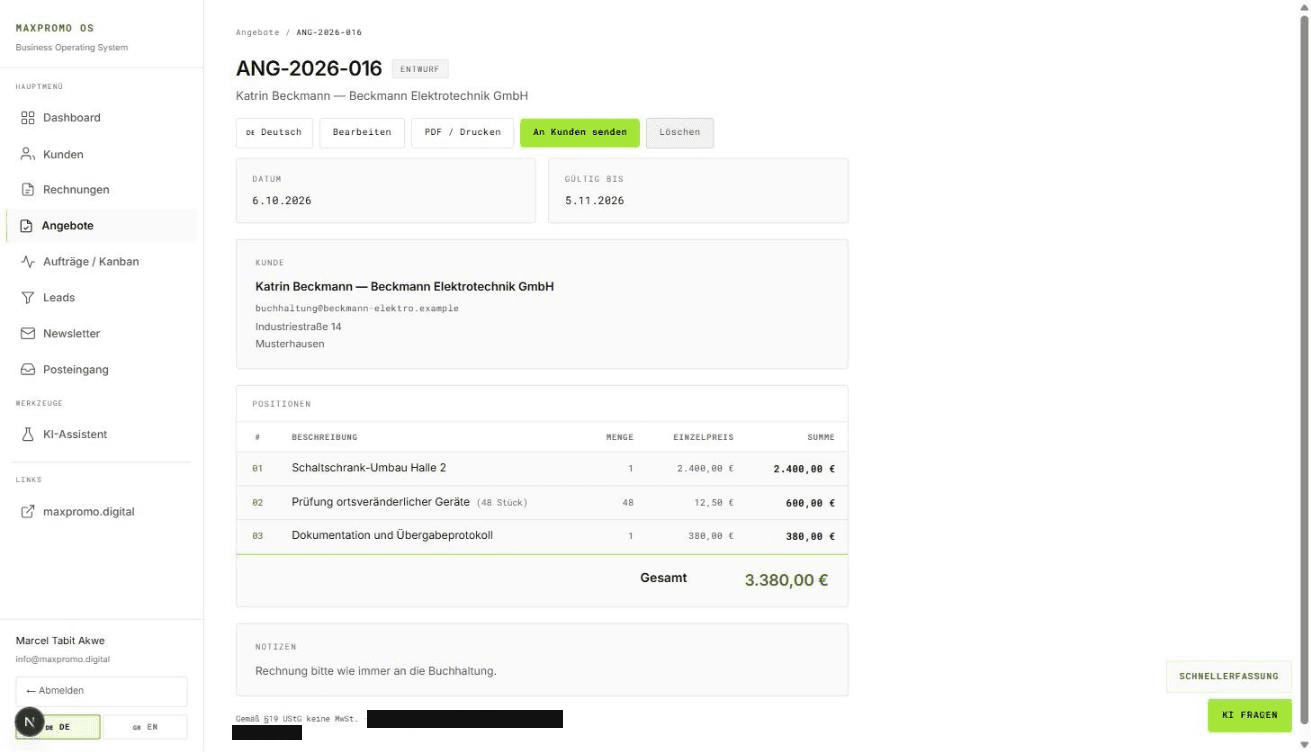
The saved quotation, in draft. It has not been sent.Open full size Step 5
The work continues.
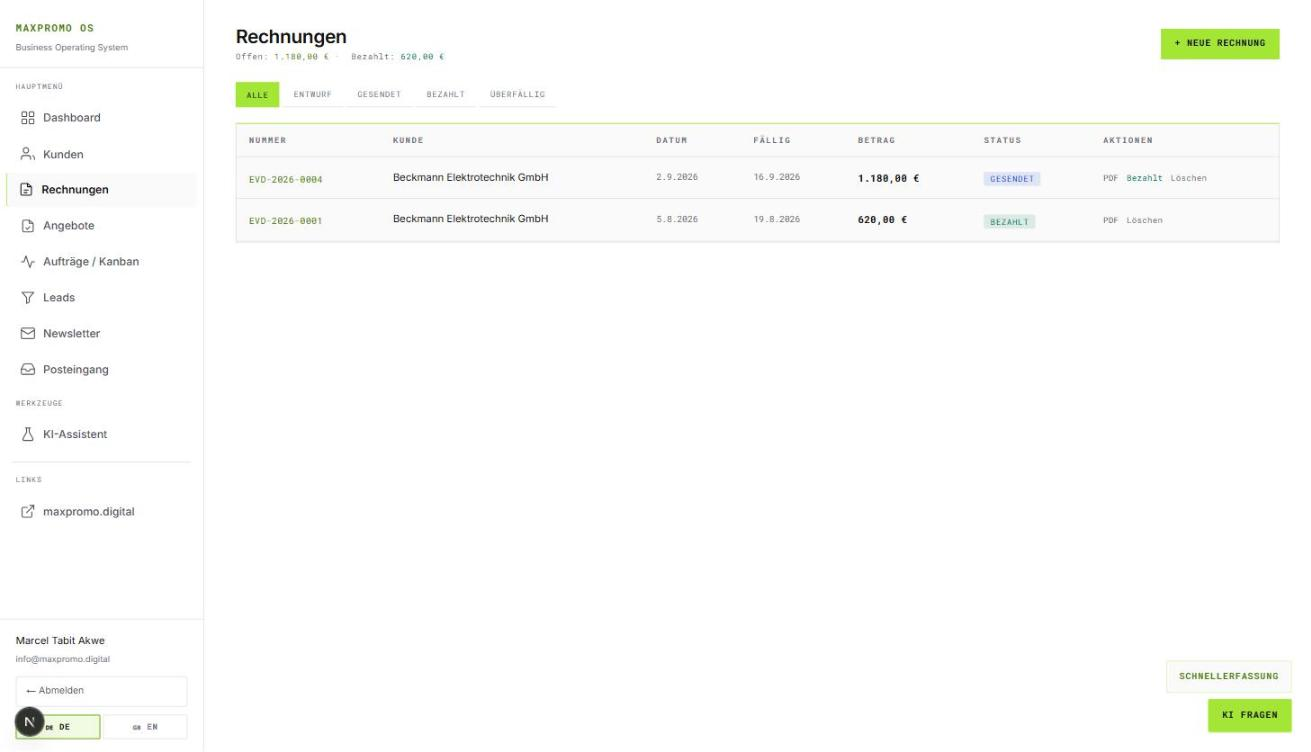
The same system carries documents on through their life. An invoice is sent, then paid, and each state is recorded rather than remembered.
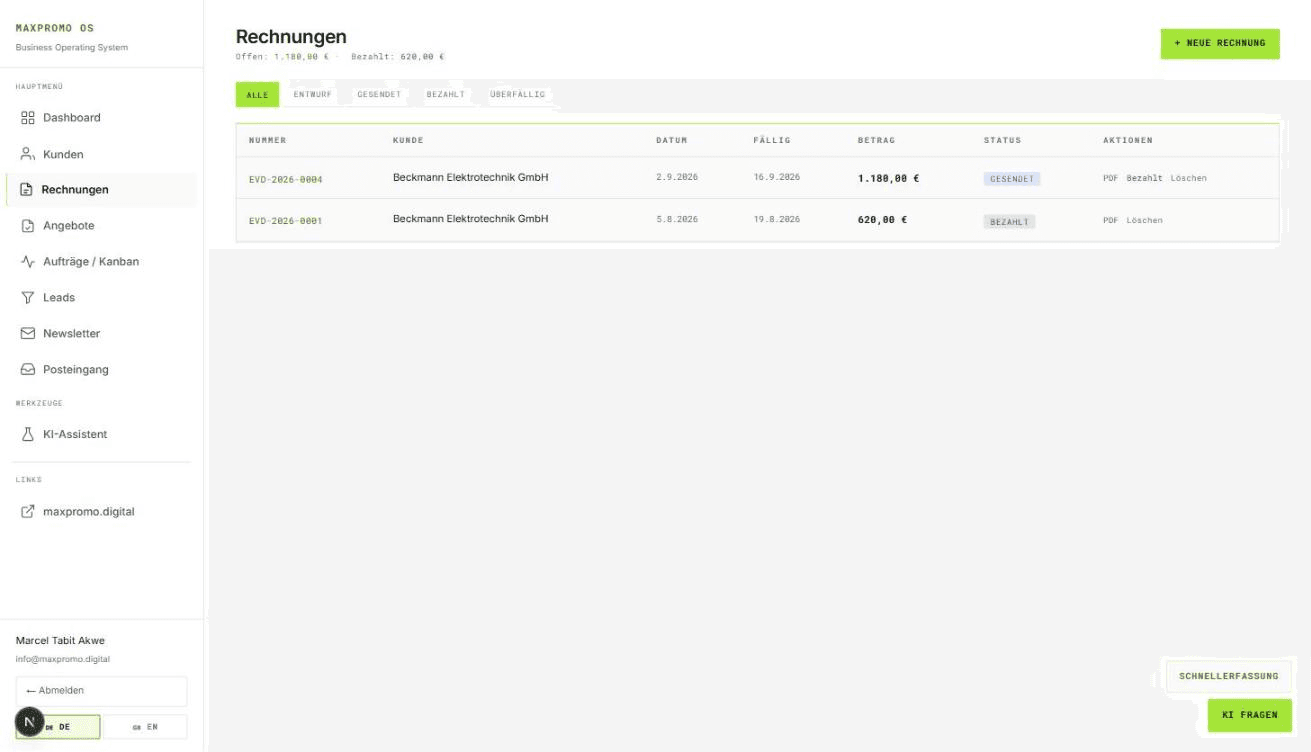
Invoices for the same invented customer, one sent and one paid.Open full size
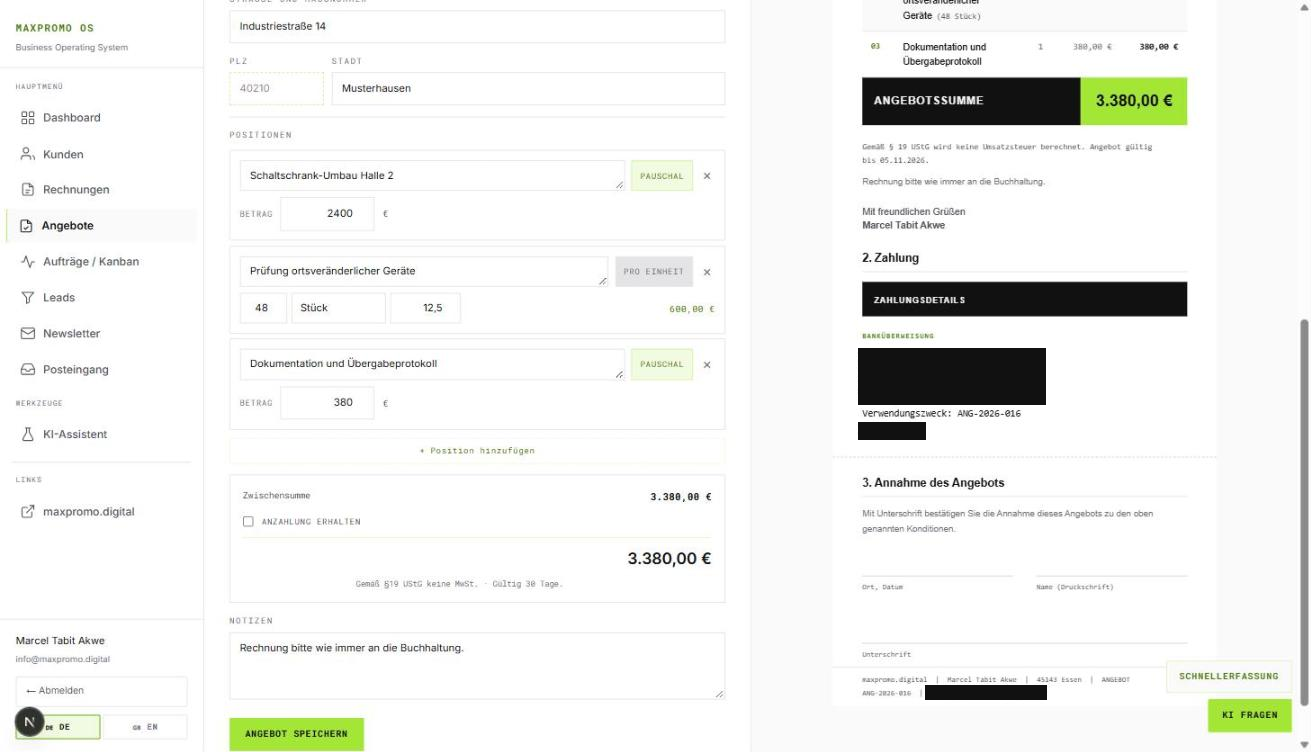
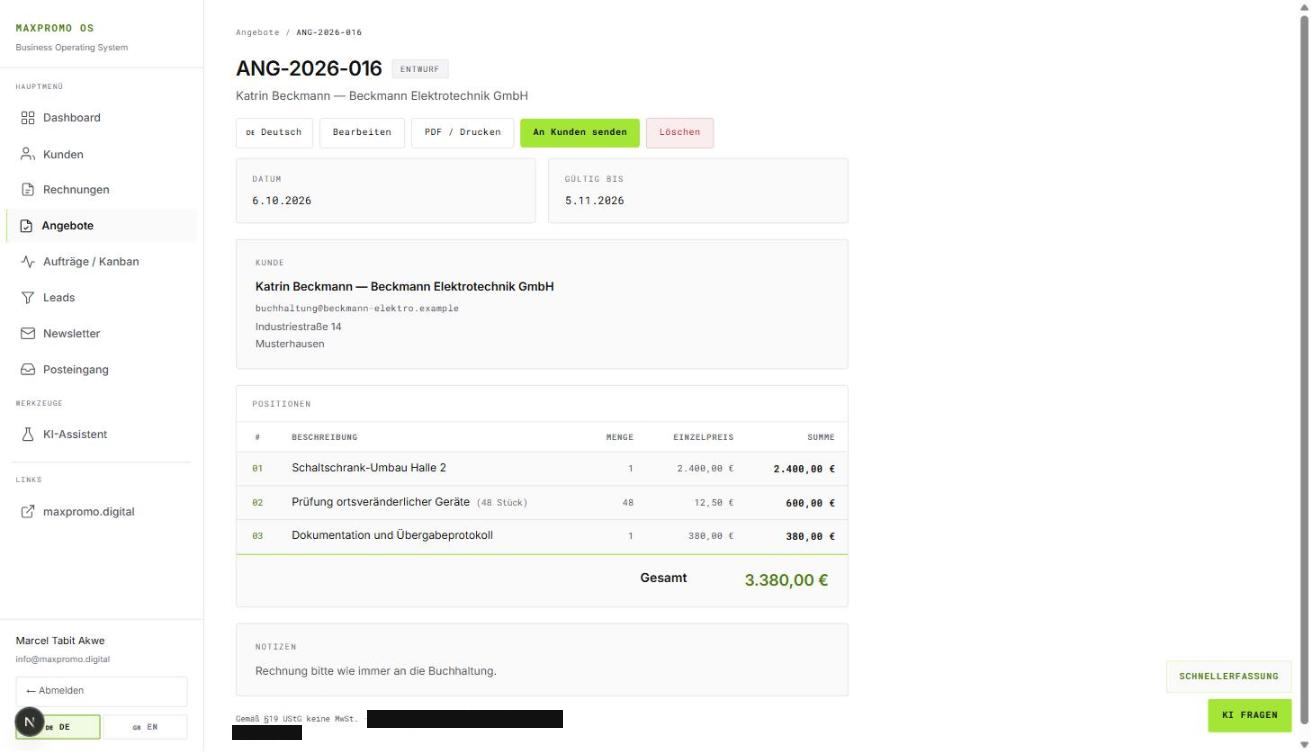
In steps 3 and 4 our bank details and tax number are covered with black bars. Nothing else in any image has been changed.
Who decides
AI can prepare the work. People still make the business decision.
In this workflow the system creates nothing and sends nothing by itself. A person checks, saves and decides when to send.
- PersonThe enquiry arrivesAs a photo, screenshot, email or note
- SystemThe system reads itIt fills in fields, it creates nothing
- PersonA person checks itAnd corrects whatever is wrong
- PersonA person savesFrom here a draft exists
- PersonA person decides to sendA separate step, a separate decision
- SystemThe system records itSent, with a timestamp
Read it carefully
What this shows, and what it doesn’t.
What it shows
- A loosely written request can become a structured quotation without anyone retyping it.
- The system says what it could not confirm instead of quietly filling the gap.
- Saving, and later sending, stay decisions a person takes.
What it doesn’t show
- How much time this saves. We haven’t measured it, so we don’t claim it.
- That every request comes out this cleanly. That is exactly why a person checks each one.
- Anything about a real customer. The customer here is invented.